
KEY INSIGHTS
| 60.7% of elite marathon runners report significant allergy symptoms linked to fragrance exposure. [15] Exercise raises skin temperature, fluidising lipid bilayers and increasing fragrance chemical penetration by 2- to 5-fold. [2] ACD caused by synthetic fragrance directly disrupts sleep, delays recovery, and creates MRSA risk. [3,4] Skin infections account for up to 10% of time-loss injuries in some sports. [4] ‘Unscented’ does NOT mean fragrance-free. Masking fragrances hide inside otherwise clean-looking labels. [5] Projekt Clarity’s entire product line is formulated with zero synthetic fragrance and zero allergens – engineered for the high-output athlete. |
The Problem Nobody in a Locker Room is Talking About
Walk into any gym in India and you’ll find athletes who obsess over their creatine timing and their progressive overload – and then reach for a scented body wash off the pharmacy shelf. That body wash may be doing more damage than a skipped recovery session. The culprit: synthetic fragrance. Not the scent itself, but the chemical cocktail that produces it.
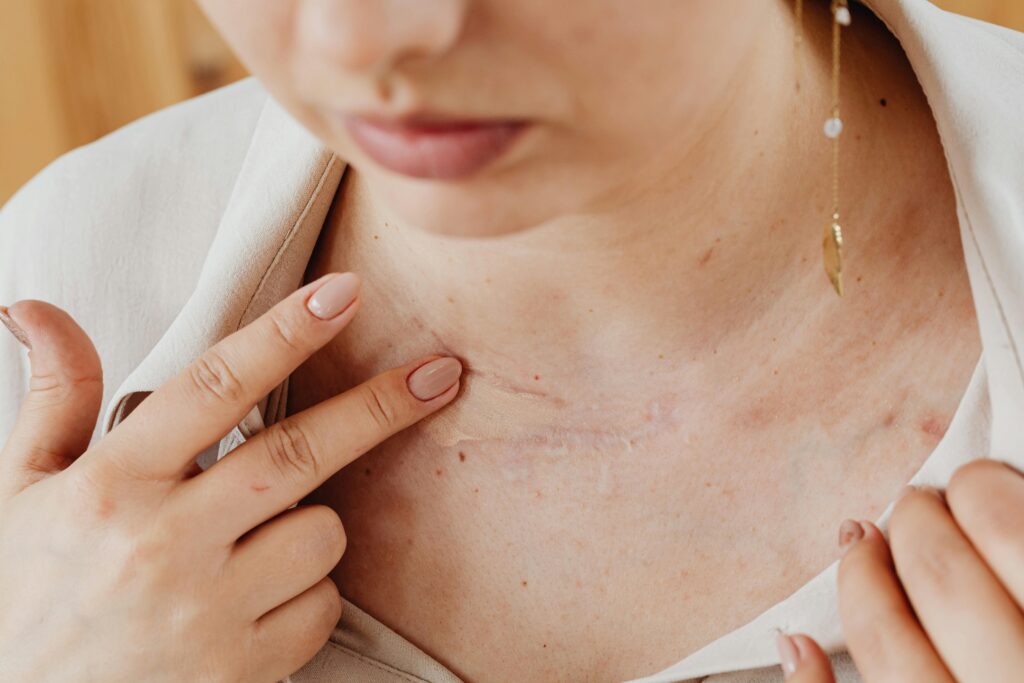
This is not a cosmetic concern. Synthetic fragrance-induced Allergic Contact Dermatitis (ACD) is a type IV delayed hypersensitivity reaction – a systemic immune response that can disrupt sleep architecture, create bacterial entry points for MRSA, and, for competitive athletes, trigger doping control complications if corticosteroids are needed to manage the flare. A bottle that smells like victory can cost you one.
The Chemical Architecture: What Is Actually Inside “Fragrance”?
Synthetic fragrances are not single compounds. A typical ‘fragrance’ listed on a product label can contain over 100 volatile organic compounds (VOCs), fixatives, solvents, and preservatives. [6] Grouped broadly:
| Chemical Group | Representative Compounds | Primary Health Risk for Athletes |
| Phthalates | DEP, DBP, DMP | Endocrine disruption; androgen biosynthesis inhibition [1] |
| Parabens | Methylparaben, Butylparaben | Estrogen mimicry; impaired hormonal homeostasis [1] |
| VOCs | Ethanol, limonene, acetaldehyde | Respiratory irritation; neurotoxicity [1] |
| Synthetic Musks | Nitro musks, Polycyclic musks | Estrogenic effects; bioaccumulation [1] |
| Antimicrobials | Triclosan | Thyroid disruption; antimicrobial resistance [1] |
Diethyl phthalate (DEP), one of the most common fixatives in deodorants, is classified as a toxic priority pollutant under the U.S. Clean Water Act – yet it legally sits on your skin during a two-hour HIIT session. [1]
Why Athletes Are Specifically Vulnerable: The Physiological Catalyst
The dermatological risk from synthetic fragrance is not the same for a sedentary person and a training athlete. Three physiological factors converge during exercise to dramatically increase hapten penetration:
1. Exercise-Induced Hyperthermia
The stratum corneum – the outermost skin layer – is your primary chemical barrier. Its effectiveness depends heavily on temperature. Research has identified three thermal permeability zones in skin: [2]
| Temperature Zone | Mechanism | Permeability Increase |
| Zone I (~100C) | Lipid fluidisation (melting) in stratum corneum | 2- to 5-fold [2] |
| Zone II (~150C) | Keratin network disruption | 10- to 100-fold [2] |
| Zone III (>150C) | Keratin vaporisation; micron-scale holes | Up to 1,000-fold [2] |
While Zone II and III temperatures are extreme, the Zone I principle of lipid fluidisation is directly relevant to intense exercise. As skin surface temperature rises during training, the lipid bilayers between corneocytes soften – allowing fragrance haptens to penetrate far deeper than they would at rest. [2]
2. Sweat as a Delivery Vehicle
Excessive sweating causes two problems simultaneously. As sweat evaporates, it leaves behind sodium, urea, and lactate that stress the skin barrier. [7] And while present, liquid sweat over-hydrates the stratum corneum, disrupting the intercellular lipid arrangement. The result: sweat physically carries dissolved fragrance chemicals through a compromised barrier and into contact with immune cells below. [8]
3. Mechanical Friction and MASD
Moisture increases the coefficient of friction at the skin-fabric interface significantly – 43% for women and 26% for men from dry to moist conditions. [9] This creates Moisture-Associated Skin Damage (MASD): micro-erosions in high-friction zones – axillae, groin, chest, upper back – the exact zones where deodorants and body washes are applied. These areas become direct ports of entry for allergens.
How ACD Develops: The Two-Phase Immune Response
Allergic Contact Dermatitis is not an irritant response – it is a cell-mediated Type IV delayed hypersensitivity reaction. This distinction matters because:
- It requires a prior sensitisation period of 5 to 7 days before any visible reaction occurs. [10]
- Once sensitised, the athlete is permanently immunologically primed to that specific hapten.
- Re-exposure triggers cutaneous inflammation within 24 to 48 hours – not immediately after application. [10]
This latency is precisely why athletes don’t connect the rash on day three to the new recovery cream used on day one. The elicitation phase involves memory T-cells releasing IL-2, TNF-alpha, and IFN-gamma at the exposure site – driving erythema, vesiculation, and intense pruritus. [10]
A complicating factor: many fragrance ingredients are not inherently allergenic. Linalool and limonene, for example, are prehaptens – they become potent allergens only after auto-oxidation from UV exposure or air contact. [11] For athletes training outdoors, this transformation is accelerated significantly.
The Systemic Performance Cost: Sleep, Recovery, and Infection
Sleep Disruption
Chronic ACD is associated with sleep disturbances in 33% to 90% of adults. [3] The mechanism is nocturnal pruritus: core body temperature peaks in the late evening, raising skin temperature and intensifying itch. Cortisol – the body’s endogenous anti-inflammatory – hits its nadir at midnight, allowing inflammatory flares to peak during the sleep window. [12]
Sleep deprivation then increases pro-inflammatory cytokines (IL-1beta, TNF-alpha), which amplify the itch response, creating a self-perpetuating loop. [3] A competitive athlete losing 2.6 hours of sleep during a dermatitis flare faces demonstrably impaired muscle recovery and cognitive function. [12]
MRSA and Secondary Infection
ACD lesions with vesiculation or denudation are open bacterial entry points. Athletes in contact sports already carry MRSA at significantly higher rates than the general population. [13] Fragrance-induced ACD effectively bypasses innate skin defenses, letting colonised bacteria transition to active infection. Skin infections account for up to 10% of time-loss injuries in some sports. [4]
Anti-Doping Complications
The primary treatment for acute ACD is glucocorticoids. Under WADA regulations, all glucocorticoids are prohibited in-competition when taken orally or by injection – oral prednisone requires approximately a 3-day washout; intramuscular injections require 5 to 10 days. [14] A widespread ACD reaction requiring oral corticosteroids near competition day requires a Therapeutic Use Exemption (TUE) – a specialist-documented process with strict timelines. A skin allergy from a scented deodorant can become a career-altering regulatory event.
The Label Lie: Why “Unscented” Is Not Safe
“Unscented” products frequently contain masking fragrances – chemicals added to cover the natural odor of raw ingredients. [5] These masking agents trigger ACD in sensitised athletes just as reliably as a cologne.
Similarly, “natural” or “botanical” labels are not safety guarantees. Essential oils like ylang-ylang, jasmine absolute, and peppermint oil contain linalool and geraniol – the same prehaptens found in synthetic mixtures. Ylang-ylang oil shows some of the highest allergy prevalence rates among tested essential oils. [11]
The only safe standard: zero fragrance. Not low fragrance, not natural fragrance, not unscented. Zero.
| HOW PROJEKT CLARITY ADDRESSES THIS Our formulations are not fragrance-reduced. They are fragrance-zero. Every product we make is built around the biology of the athlete’s skin under load – not the biology of a spa session. |
Biological Reset – Syndet Recovery Wash (pH 5.5)
Designed as a post-workout skin reset, our Syndet Recovery Wash addresses each fragrance-related liability head on:
- Zero synthetic fragrance, zero allergens – labelled and formulated to the actual standard, not a marketing claim
- Syndet (synthetic detergent) base: avoids the alkaline pH disruption that worsens compromised post-workout skin
- pH 5.5 – matched to skin’s natural acid mantle, supporting the microbiome barrier that fragrance-damaged skin loses
- Capryloyl Glycine: creates a pH-hostile environment inhibiting C. acnes growth without harsh biocides
- Zinc PCA: 5-alpha reductase inhibitor that regulates sebum, starving lipophilic odour-causing bacteria
- Triethyl Citrate: disables bacterial esterases responsible for converting sweat into malodorous compounds
The label warning states explicitly: “The formula is fragrance-free; any scent is characteristic of the active raw materials.” That’s not a disclaimer. That’s science transparency.
Biological Shield – Pre-Workout Defence Spray (pH 4.5)
Applied 5 minutes before training, the Biological Shield addresses the pre-exercise window when athlete skin is about to enter the high-temperature, high-friction, high-sweat environment:
- pH 4.5 – creating an environment hostile to C. acnes and odour-producing bacteria before training begins
- Salicylic Acid (BHA): clears pores pre-sweat, preventing bacterial clogging when sweat cannot flow freely
- Triethyl Citrate: enzyme block that disables odour-producing bacterial esterases at the first contact point
- Zinc Ricinoleate: cages and neutralises odour molecules that bypass the enzyme block – a second-line defence
- Niacinamide: reinforces the skin barrier, counteracting permeability increase from exercise-induced hyperthermia
- Zero aluminum salts, zero aerosol propellants, zero synthetic fragrance, zero parabens, zero phthalates
Together, these two products form a Performance Care system – not two standalone items. The Pre-Workout Defence Spray builds the biological shield before the skin barrier is compromised by training. The Syndet Recovery Wash resets it after. Neither product ever introduces a synthetic hapten onto skin that is about to be – or has just been – made maximally permeable by exercise.
The Practical Protocol: What Athletes Should Do
- Strict label literacy: reject any product listing ‘Fragrance,’ ‘Parfum,’ ‘Aroma,’ or ‘Masking Fragrance’
- Pre-training: apply a clinically formulated, fragrance-free pre-workout spray to chest, back, and underarms 5 minutes before lacing up
- Post-training: shower within 30 minutes using lukewarm water and a pH-balanced syndet wash to remove sweat, salt, and residual haptens before the hyper-permeable post-exercise window closes
- Locker room awareness: fragrance vapor from teammates’ products can trigger reactions in sensitised athletes – advocate for fragrance-free zones in shared environments
- If dermatitis is suspected: consult a dermatologist for patch testing using the FM I and FM II standard series; consider the ACDS CAMP database to identify safe product alternatives
Conclusion
Synthetic fragrance allergy is not a niche cosmetic issue for athletes – it is a documented performance liability with cascading consequences: sleep disruption, MRSA risk, potential anti-doping violations, and chronic dermatitis in the exact skin zones under maximum athletic stress. The athlete’s physiological state during training – elevated temperature, moisture, friction – systematically amplifies chemical penetration beyond what any sedentary risk profile predicts.
The solution is not complicated. It is zero. Zero synthetic fragrance. Every Projekt Clarity product is built on that single non-negotiable. Because performance care is not about smelling good at the gym. It is about staying in the game.
References
- Evaluation of pollutants in perfumes, colognes and health effects. PMC.
- The effect of heat on skin permeability. PMC.
- The Impact of Sleep Dysfunction on Inflammatory Skin Diseases. PMC.
- MRSA: Information for Coaches and Athletes. MN Dept. of Health.
- Global Cosmetic Allergen and Fragrance Compliance. Hale Cosmeceuticals.
- Ubiquity, Hazardous Effects, and Risk Assessment of Fragrances. PMC.
- Exercising with Atopic Dermatitis. Healthline.
- Fragrance contact allergy: a clinical review. ResearchGate.
- Influence of epidermal hydration on the friction of human skin. PMC.
- Advancing the understanding of allergic contact dermatitis. Frontiers.
- Fragrance Contact Allergy – A Review Focusing on Patch Testing. PMC.
- Nocturnal pruritus and sleep disturbance associated with dermatologic disorders. PMC.
- Association between Contact Sports and Staphylococcus aureus. PMC.
- Glucocorticoids and Therapeutic Use Exemptions. WADA.
- AQUA as predictor of allergy in elite marathon runners. PMC.
- Perfume Labeling Requirements: US vs EU. Stock Fragrance.